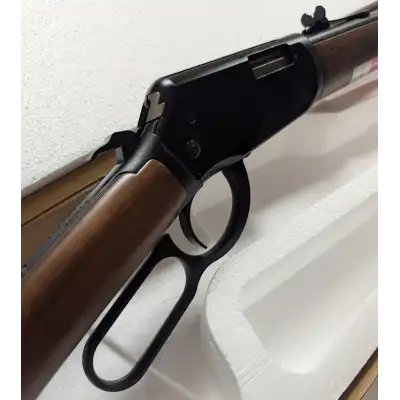
Effectiveness in driven hunting relies on the speed of target acquisition and the accuracy of shooting. The riflescope, far from being a simple accessory, then becomes an essential extension of the hunter's gaze. It must offer an optimal compromise between a wide field of vision, impeccable brightness and an intuitive reticle for instinctive shots at short and medium range.
The Crucial Importance of Field of View and Magnification
When hunting, visibility of the environment is paramount. A wide field of vision allows you to track moving game effortlessly, reducing the risk of losing sight of it. Scopes designed for hunting typically feature a low minimum magnification, often 1x or 1.25x. This provides vision nearly identical to that of the naked eye, facilitating rapid aiming at close and moving targets.
Maximum magnification, on the other hand, rarely exceeds 6x or 8x. This range is more than sufficient to identify game and place accurate shots at typical driven distances, without compromising speed of acquisition. Too high a magnification would reduce the field of view, making game tracking more complex.
Brightness and Light Transmission: See Clearly, Even in Undergrowth
Hunting often takes place in low-light conditions: dawn, dusk, or dense undergrowth. A bright scope is essential. Brightness is determined by several factors, including the diameter of the objective lens and the quality of the optical coatings. A large-diameter objective lens (often between 20 mm and 24 mm for hunting scopes) captures more light.
However, light transmission is just as important. High-quality lenses with anti-reflective multi-layer coatings maximize the amount of light transmitted to the eye. This ensures a clear, sharp, and high-contrast image, even in dark environments, allowing for quick and reliable game identification.
Reticles Adapted to the Drive: Speed and Intuition
The choice of reticle is crucial for hunting. It must allow for rapid target acquisition and intuitive trajectory compensation. Several types of reticles are popular for this discipline:
Red dot reticle (illumination): A central red dot, often adjustable in intensity, provides extremely fast aiming. It is particularly effective for instinctive shooting because it instantly directs the eye to the potential point of impact.
Réticules 4A ou German #4 : Caractérisés par des barres épaisses sur les côtés et le bas, convergeant vers un point central fin. Ils guident rapidement le regard et sont polyvalents pour différentes conditions de luminosité.
Réticules avec cercles : Certains réticules intègrent un cercle autour du point central. Ce cercle aide à l'estimation de la distance et à l'anticipation du mouvement du gibier.
Le plan focal du réticule est également un élément à considérer. Pour la battue, un réticule au premier plan focal (FFP) conserve sa taille apparente par rapport à l'image grossie, permettant une estimation précise de la chute de balle à différentes distances, même en modifiant le grossissement. Un réticule au second plan focal (SFP) garde une taille constante, ce qui est souvent préféré pour sa simplicité à faible grossissement.
Robustesse et Fiabilité : La Lunette à l'Épreuve du Terrain
Une lunette de battue est soumise à des chocs, des variations de température et l'humidité. Sa robustesse est non négociable. Un corps en aluminium monobloc, purgé à l'azote pour éviter la formation de buée interne, et des joints toriques pour l'étanchéité sont des caractéristiques essentielles. La résistance aux chocs garantit la stabilité du réglage, évitant un décalage du point d'impact après une chute ou un choc.
La qualité des tourelles de réglage est également importante. Elles doivent offrir un clic net et reproductible pour des ajustements précis de la dérive et de l'élévation. La possibilité de remise à zéro rapide (Zéro Stop) est un atout, permettant de retrouver rapidement le réglage initial après des ajustements temporaires.
Comparatif des Caractéristiques Essentielles pour la Battue
Pour illustrer l'importance des différents critères, voici un tableau comparatif simplifié des caractéristiques souvent rencontrées :
Intégration et Montage : L'Harmonie avec l'Arme
Mounting the scope on the rifle is a crucial step that directly influences accuracy. Quality mounting collars and a solid base ensure the optic's stability. For driven hunts, removable mounts or quick-release mounts are sometimes preferred, allowing for quick switching from open sights to a scope, or for removing the optic for transport. It is essential that the mount allows for perfect alignment of the optical axis with the barrel axis.
The scope must also be perfectly balanced with the weapon. A scope that is too heavy or poorly positioned can impair the rifle's handling, impacting aiming speed and swing. The eye relief, that is, the distance between the eye and the scope's eyepiece, must be sufficient to avoid contact during recoil and provide a full field of vision.
📌 The products discussed in this article are available at the bottom of the page. And if you can't find exactly the model you're looking for, simply type the name of the desired product into the search bar of our store - you'll find it in seconds.
On the other hand, if you're looking for a specific product, simply tap the WhatsApp button at the bottom of your screen on our website and send us its name. You'll receive an instant response to see if it's in stock.